
by Yalidy Matos, Domingo Morel, and Michelle Bueno Vásquez
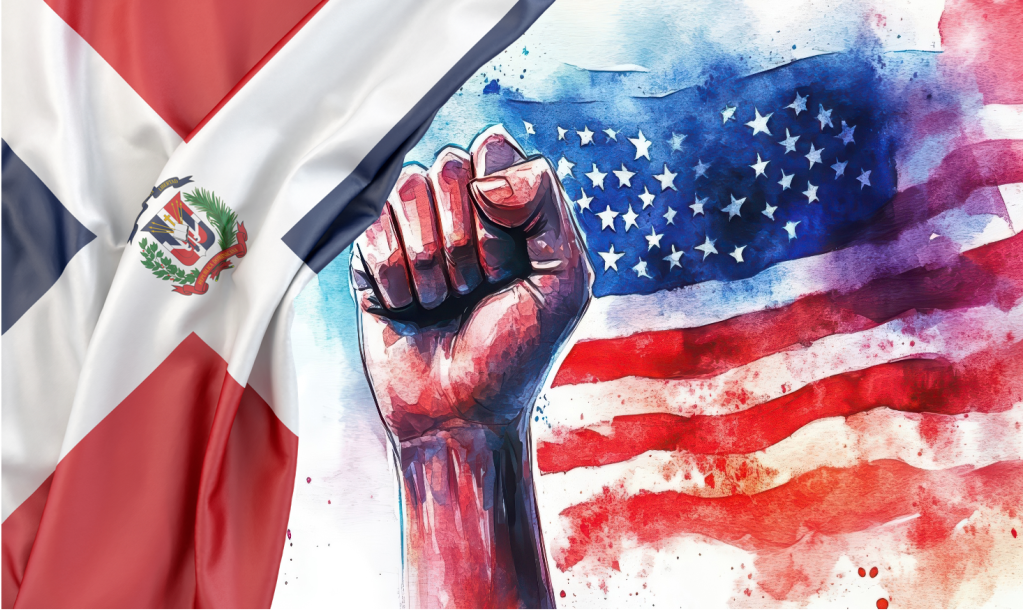
As the Dominican population has increased, so has its political clout. New York City is home to the largest Dominican community in the United States and is where most Dominican American elected officials (DEOs) are from, but there are Dominican elected officials in other states. As well as the states with the second and third largest Dominican populations—New Jersey and Florida— Massachusetts , Rhode Island , Maryland, and Pennsylvania have elected Dominican American officials to city councils, mayoralties, state legislatures, and the US Congress.
Compared with Latino subgroups of similar size in the United States, including Guatemalans and Colombians as well as Salvadorans, Dominicans seem to be getting elected at equal or even greater rates (Guarnizo 1994; Guarnizo et al. 2003). For example, Salvadorans number 2.29 million to Dominicans’ 2.27 million, but Salvadorans have not had any representation in Congress.2 To the best of our knowledge, there have been nine elected officials of Salvadoran descent at any level in the United States other than Sununu. The largest Salvadoran population is in Maryland, mostly southern Maryland, but only four of those officials have served in that state. By contrast, Adriano Espaillat has represented New York City’s 13th district since 2016 and there have been at least 55 DEOs nationwide. Clearly, Dominicans have leveraged their population size in concentrated areas, US institutional structure, and organizational power in ways that other Latino subgroups have not been able to do. This book project examines this success. It argues that Dominicans’ unique attachment to politics, which has roots in the home country, plays a role. It will also explore how identity politics, in particular race and gender, play a role in how US DEOs govern.
Politics in Our Veins (forthcoming NYU Press) will illustrate that Dominican American politics is uniquely positioned to a) shed light on Latino politics as a whole; b) provide a blueprint for other groups, such as Salvadorans and Colombians, who want to incorporate into American politics more fully; c) help us more deeply understand how US identity politics, in particular race and gender identities, influence Dominican American elected officials’ political attitudes and behavior. By focusing on just one Latino national group, we will be able to explain a lot more about Latina/o politics than a book that can only provide broad strokes about an “imagined community,” to use Anderson’s term, that is socially constructed, top-down enforced, and heterogeneous. Our focus on Dominican American politics intentionally disaggregates Latino politics in myriad ways. From the onset, we were interested in understanding how nationality, ethnicity, race, gender, and context affect Dominican political incorporation and DEOs’ political behavior. This kind of disaggregation, we argue, is desperately needed in research on Latino politics.
 Yalidy Matos